by Alessandro Ferrini
Dante’s poem was an immediate great success, as demonstrated by the over six hundred manuscripts that circulated in the fourteenth century, immediately after the poet’s death.

When between the 1460s and 1470s German printers introduced the technique of printing with movable type, the Comedy was among the privileged texts in Italy. Therefore, among the so-called incunabula, that is, the first books printed until the beginning of the sixteenth century, we find various editions of Dante’s poem.
The first in chronological order dates back to April 1472 and was printed in Foligno in eight hundred copies by the German printer Giovanni Numeister, together with Evangelista Angelini di Trevi, with the collaboration of the goldsmith from Foligno Emiliano Orfini.

In the same year a second edition was printed in Mantua, now very rare, followed by one in Venice by Windelin von Speyer, the first to be commented. In the following years the work was also printed in Naples (1477) and Milan (1478).
The “in folio” edition commissioned by the Medici, printed in Florence at the presses of Niccolò di Lorenzo della Magna, commented by Cristoforo Landino and embellished with copper engravings inspired by the drawings of Sandro Botticelli, dates back to 1481.
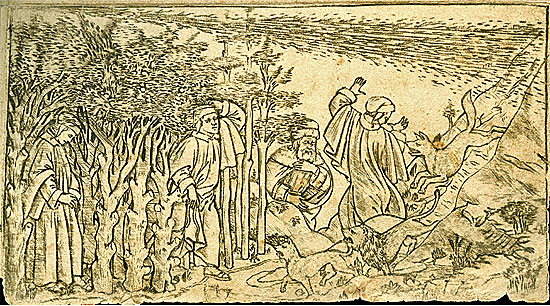

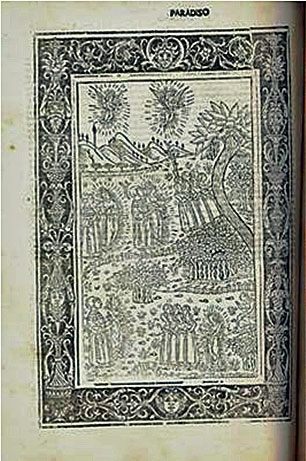
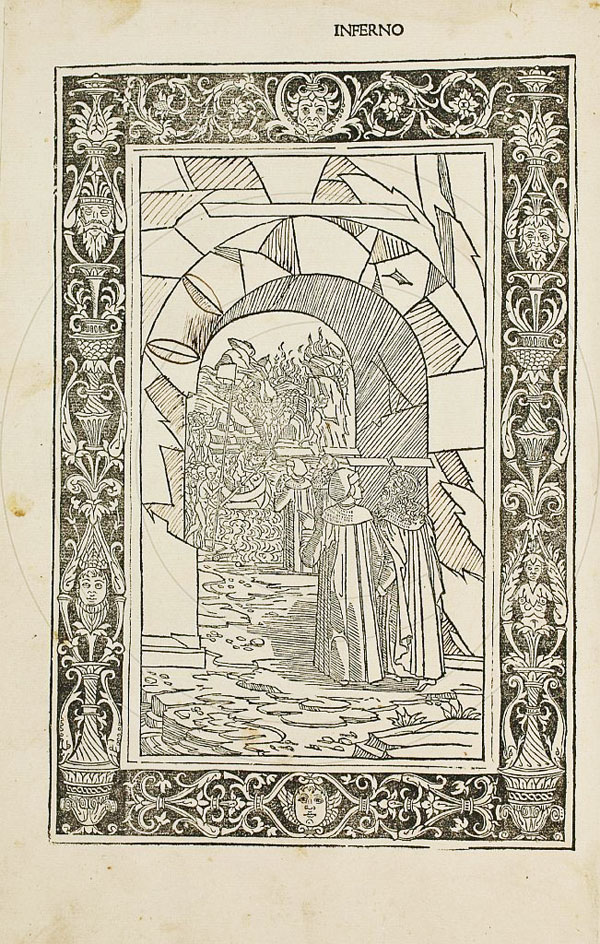
Then it is the turn of the one in Brescia of 1487 printed by the typographer Bonino de Boninis, the first accompanied by woodcut illustrations
Finally the famous “pocket” volume printed in Venice in 1502 by Aldo Manuzio and edited by Pietro Bembo who fixed a new version of the poem, the result of careful philological work: it became the reference text for subsequent editions.
 tuttatoscana